Understanding how many downlights you need per room is crucial for creating the right ambiance in your home. This decision can significantly impact both aesthetics and functionality. According to lighting expert Linda Brightman, “The right number of downlights can transform the feel of a space.” She emphasizes that too few or too many can lead to a less desirable outcome.
In 2026, the demand for effective lighting solutions continues to rise. Homeowners seek ways to improve the quality of their living spaces. The balance of light can enhance mood, productivity, and comfort. However, determining how many downlights to install can feel overwhelming. Each room serves a different purpose, which influences your lighting needs.
Consider the kitchen, living room, and bedroom. Each room may require different light levels. Moreover, the height of ceilings and room size can change the number of fixtures needed. It may help to think of lighting as a layering process. While it’s easy to think more is better, too many can create harsh shadows. Achieving the perfect lighting requires reflection and adjustment. Ultimately, understanding how many downlights you need per room is an essential step toward effective home design.
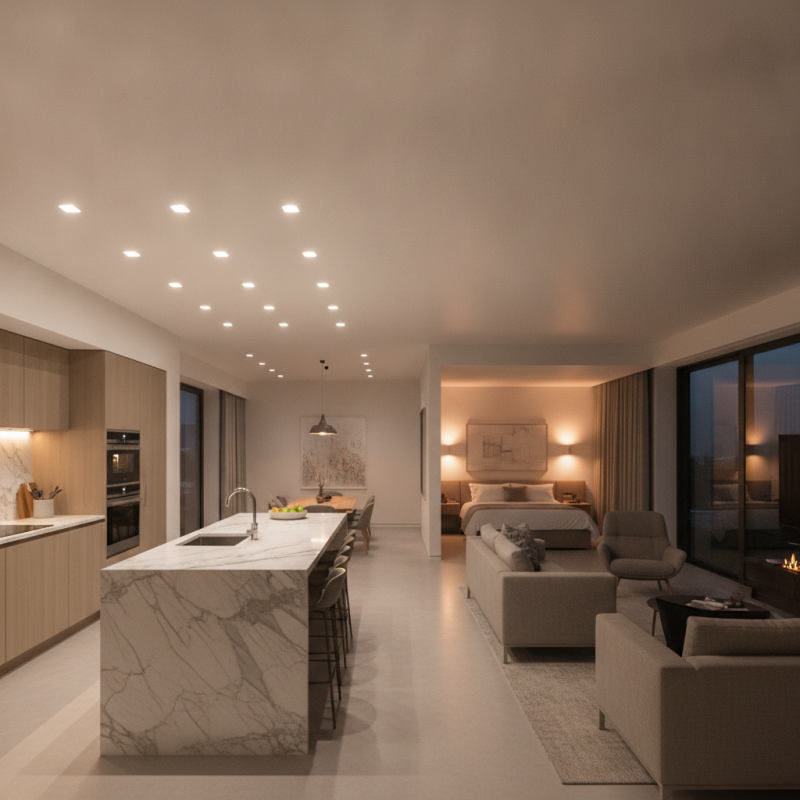
When determining how many downlights you need for each room, several factors come into play.
Room size is a crucial aspect. Larger rooms generally require more downlights to ensure even illumination.
You want to avoid dark corners or overly bright spots.
The purpose of the room also matters. Areas meant for tasks, like kitchens or studies, might need focused lighting.
On the other hand, living rooms or bedrooms may benefit from ambient lighting.
Think about the activities carried out in that space to make informed choices.
Consider the height of ceilings. Higher ceilings often require more downlights to achieve the desired brightness.
Aim for a well-distributed lighting effect to create a cozy atmosphere.
Tips: Test various arrangements with a few downlights. This will help you visualize the final look.
Also, reflect on how shadows play in your space. It can affect the overall aesthetic.
Balancing different light sources is essential for an inviting ambiance.
When planning for downlight placement in a room, understanding size and layout is crucial. A recent industry report highlights that effective lighting improves both aesthetics and functionality. For instance, rooms larger than 200 square feet may require six to eight downlights for optimal illumination. This number can vary based on the room's purpose. Kitchens might need more, while bedrooms can use fewer fixtures.
In an open-concept space, strategic placement is essential. Aim for about 4 to 6 feet between each downlight to reduce shadows. Positioning them too far apart may leave dark spots, disrupting the flow of light. A 2023 study found that improper downlight spacing can reduce visual comfort by nearly 30%. This suggests careful consideration and frequent adjustments in designs.
Thinking about layout can further inform your decisions. Ceiling height is a significant factor. Standard eight-foot ceilings require different considerations than ten-foot ceilings. Higher ceilings often need more powerful downlights to maintain brightness. Keep ceiling materials and colors in mind as well. Darker ceilings absorb light, possibly necessitating additional fixtures. Balancing all these elements enhances both brightness and ambiance in a room's design.
When planning lighting for your home in 2026, understanding lumens is crucial. Each room requires different brightness levels for comfort and functionality. Living rooms or common areas often need around 10 to 20 lumens per square foot. This range fosters a welcoming atmosphere without overwhelming brightness. For a typical 200-square-foot living room, that means about 2,000 to 4,000 lumens in total.
In contrast, kitchens demand brighter lighting, around 30 to 50 lumens per square foot. This intensity ensures safe food preparation and tasks that require focused attention. A 150-square-foot kitchen may need 4,500 to 7,500 lumens to achieve this level. However, many underestimate the importance of task lighting in specific areas. An island or workspace should have additional focused lights, adjusting the overall lumens needed.
Bedrooms are different. Soft lighting is key, targeting 10 to 15 lumens per square foot. A serene environment promotes relaxation and restfulness. For a standard 120-square-foot bedroom, this translates to 1,200 to 1,800 lumens. Striking the right balance is challenging. Overly bright lights can disturb sleep patterns, while too dim lighting may lead to eye strain during late-night reading. Planning is essential.
| Room Type | Recommended Lumens per Square Foot | Example Room Size (sq ft) | Total Lumens Required | Number of Downlights (Assuming 800 lumens each) |
|---|---|---|---|---|
| Living Room | 20 | 300 | 6000 | 8 |
| Kitchen | 30 | 150 | 4500 | 6 |
| Bedroom | 10 | 200 | 2000 | 3 |
| Bathroom | 30 | 100 | 3000 | 4 |
| Dining Room | 15 | 250 | 3750 | 5 |
When planning your space in 2026, the number of downlights should cater to both ambient and task lighting needs. Industry reports suggest that a well-lit room requires about 20 lumens per square foot for general lighting. For tasks like cooking or reading, increase this to about 50 to 100 lumens. Understanding the purpose of each room affects downlight choices significantly.
Consider measuring your room size. A small bedroom of 100 square feet might need around 400 to 600 lumens in total. In contrast, your kitchen could require 800 to 1,200 lumens. Ensure proper placement to avoid shadows in working areas. Too few downlights can lead to a dim atmosphere, while too many can cause glare and discomfort.
Tip: Define task areas within rooms. This helps identify where to focus your lighting. Consider the height of the ceiling as well. Higher ceilings might need more lumens. As you adjust your lighting, evaluate how it enhances overall room functionality. Simplicity in design should not compromise the lighting effectiveness in any space.
The future of downlight design and technology is evolving rapidly. By 2026, energy efficiency will be a key focus. According to industry reports, LED technology is projected to dominate over 80% of the downlight market. This shift is due to increasing energy regulations and consumer demand for sustainable solutions. Designers will need to balance aesthetics with functionality.
Smart downlights will become increasingly popular. Integration with home automation systems is a major trend. Reports show that nearly 50% of households plan to adopt smart lighting in the next three years. These systems allow for customizable lighting scenarios. They can adjust according to time of day or activity, enhancing user experience. However, the complexity of installation and technology may pose challenges for some consumers.
Color temperature and dimmability will also play crucial roles in downlight design. The ability to create warm or cool light will cater to different moods and activities. Data indicates that 70% of consumers want adjustable downlight options. Nevertheless, this could complicate the selection process for buyers. Understanding the right specifications for each room becomes vital as consumer choices expand. The industry must adapt to these preferences while ensuring reliability in performance and design.
This chart illustrates the recommended number of downlights for various rooms in 2026, reflecting the trends in design and technology that emphasize energy efficiency and optimal lighting.
: Rooms over 200 square feet may need six to eight downlights for proper illumination.
Aim for four to six feet between each downlight to avoid shadows.
Higher ceilings often require more powerful downlights to maintain the same brightness level.
Living rooms should have about 10 to 20 lumens per square foot for a welcoming atmosphere.
Kitchens need around 30 to 50 lumens per square foot for functionality and safety.
Bedrooms should have soft lighting, with about 10 to 15 lumens per square foot for restfulness.
Focus on specific tasks to adjust lighting, ensuring areas like kitchens and workspaces are well-lit.
Too few downlights can create a dim atmosphere, affecting comfort and usability.
Darker ceilings absorb light, possibly needing more fixtures for adequate illumination.
Understanding each room's purpose helps define lighting needs and enhances overall usability.
In "How Many Downlights Do I Need for Each Room in 2026?", the article explores various factors to consider when planning downlight installation. Key considerations include room size and layout, which significantly impact the optimal placement of downlights. The article provides guidance on calculating the appropriate quantity, emphasizing the need for a balance between ambient and task lighting. It also suggests recommended lumens per square foot tailored to different room types, ensuring that specific lighting needs are met.
Additionally, the piece looks at adjustments that may be necessary based on the design and technological advancements expected in 2026. This forward-thinking approach highlights not only the importance of determining how many downlights do I need per room but also how future trends might influence lighting design choices. Overall, the article serves as a comprehensive guide for homeowners and designers looking to enhance their spaces with effective lighting solutions.

Pina Light